Ports have always been places of movement: of goods, people, work, ideas and opportunity. Today, the regions around them are moving again, fast, and under pressure of a more digital and sustainable future, towards greener industries, digital logistics, new blue economy activities, changing waterfronts and different kinds of jobs.
To ensure a just transition we need to keep people and inclusion at the heart of planning. Who gets access to the new opportunities? Who needs support to adapt? What skills will workers, learners, trainers, employers and communities need next? And how can port city regions make sure that change is fair, inclusive and locally rooted?
These are the issues at the heart of the PortAbility Blueprint, which is our shared map for action: it brings together evidence from different port city regions and turns it into priorities for skills, inclusion, training and cooperation.
The synthesis brings together evidence and insight from PortAbility’s work across its four regions: Taranto, Andalusia, Volos/Thessaly and Cyprus. It draws on applied research carried out by partners over the past year, the knowledge and experience shared by regional stakeholders, and the academic literature review developed within PortAbility, now published open access in the Sustainability Journal.
The Blueprint was written to help PortAbility move from shared evidence to shared action. It identifies the main challenges, priorities and opportunities that will now inform the next stage of the CoVE: the competency framework, learning resources, training activities, upskilling actions, regional cluster work, study visits and national events.
The synthesis helps readers think through questions that are already shaping port city regions:
Who is at risk of being left out of the green and digital transition?
What skills will workers, learners, trainers and organisations need next?
How can port authorities, education providers, businesses, unions and community organisations work together more effectively?
How can regional skills systems become more inclusive, flexible and future-facing?
It is written for everyone helping to shape the future of port city regions: port authorities, VET providers, employers, chambers of commerce, trade unions, NGOs, employment and guidance professionals, public bodies, universities, researchers, social enterprises, civic organisations and local development actors.
Inside, readers will find a shared picture of the challenges and opportunities facing Europe’s port city regions, from green and digital skills to social inclusion, from stakeholder cooperation to future learning pathways. It shows why vocational education and training has a central role to play, not only in preparing people for new jobs, but in helping regions manage transition in a fairer and more connected way.
Many of you contributed your knowledge, experience and local insight to this work. We hope you will recognise your perspectives in the synthesis, and also find new comparisons, ideas and questions that speak to your own local reality.
Read the PortAbility Blueprint: Executive Synthesis here
We are proud to share that a new peer-reviewed article co-authored by members of the PortAbility team has been published in Sustainability, one of the leading international scientific journals in the field of sustainabledevelopment. Published by MDPI — a globally recognised open-access publisher indexed in both Web of Science and Scopus — Sustainability brings together interdisciplinary research from across the natural sciences, social sciences, and humanities, and holds a CiteScore of 5 and an h-index of 207. Having our work featured in this journal is a strong signal of the academic rigour and relevance of the PortAbility project, and it reflects the qualityof the research being conducted by our consortium.
The article, titled “Port City Regions in Transition: Skills, Inclusion, and Innovative VET Pathways for the Twin Transformation”, offers a comprehensive integrative literature review that examines how port city regions (PCRs) across Europe are navigating the twin green and digital transition — and what this means for workers, training systems, and communities.
The authors synthesise five interconnected areas of scholarship: the spatial and institutional transformation of port city regions; skills foresight and future competences; challenges and reforms in vocational education and training (VET); social inclusion and equity; and innovative VET methodologies in port-adjacent sectors.
Key findings and takeaways
One of the central arguments of the article is that the transition happening in port cities is not merely a technical challenge — it is a deeply socio-institutional one. Technologies such as Onshore Power Supply (OPS) systems, alternative fuels, and digital logistics platforms are rapidly changing how ports operate. But the success of these innovations depends fundamentally on the adaptive capacity of workers, the quality of training systems, and effective governance.
The article highlights several important findings:
Regarding skills foresight, the research draws on major forecasting exercises — from the World Economic Forum’s Future of Jobs Report 2025 to CEDEFOP’s Skills Forecast — to show that between 60 and 375 millionworkers globally may need to transition to new occupational categories by 2030. For port city regions, this translates into urgent demand for transversal competences such as digital literacy, adaptability, systems thinking, and intercultural collaboration.
On VET challenges, the article identifies a widespread “sustainability literacy gap” in maritime training. Traditional maritime education still focuses predominantly on technical competences such as navigation and cargo operations, while often neglecting broader sustainability competences — including green technology integration, regulatory compliance, and environmentally responsible decision-making.
In terms of social inclusion, the findings are equally compelling. In Greece, the NEET rate (young people not in employment, education, or training) stood at 19.7% in 2022 — nearly double the EU average. Women remainsignificantly underrepresented in STEM-oriented VET pathways. Migrants and refugees face compounding barriers including language gaps and slow recognition of prior qualifications. The article argues that withoutdeliberately inclusive training policies, the twin transition risks deepening existing inequalities rather than reducing them.
Finally, the article examines innovative VET methodologies that are proving effective in port-adjacent sectors: work-based and dual learning models, micro-credentials and stackable qualifications aligned with the Europass framework, immersive technologies such as VR/AR simulators and digital twins, and living lab environments that bring together education, industry, public institutions, and civil society through what the authors callquadruple helix collaboration.
The article concludes with a clear call to action: the resilience and competitiveness of port city regions depends on investing in people — not just infrastructure. Inclusive, quality-assured VET systems, anchored in EU frameworks and aligned with international maritime standards, are essential to closing critical skills gaps while ensuring that no worker is left behind in the transition.
This research directly underpins the work being carried out within the PortAbility project, which is funded by the European Union under the Erasmus+ Centres of Vocational Excellence (CoVE) initiative. It reinforces ourcommitment to developing innovative, standards-aligned, and socially inclusive VET pathways for port city economies across the East Mediterranean and beyond.
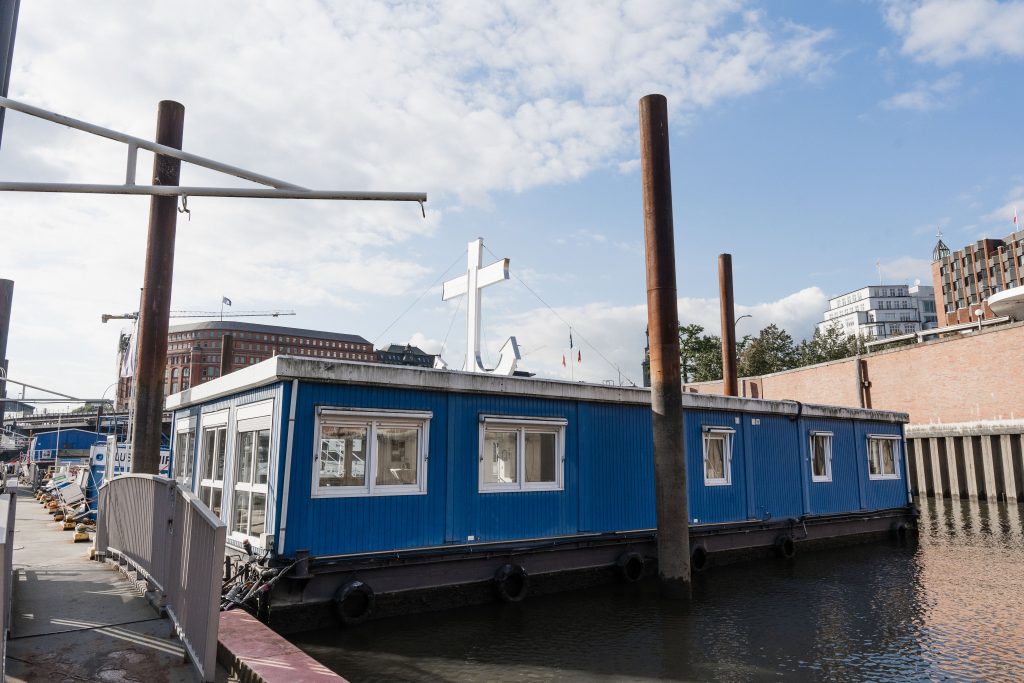
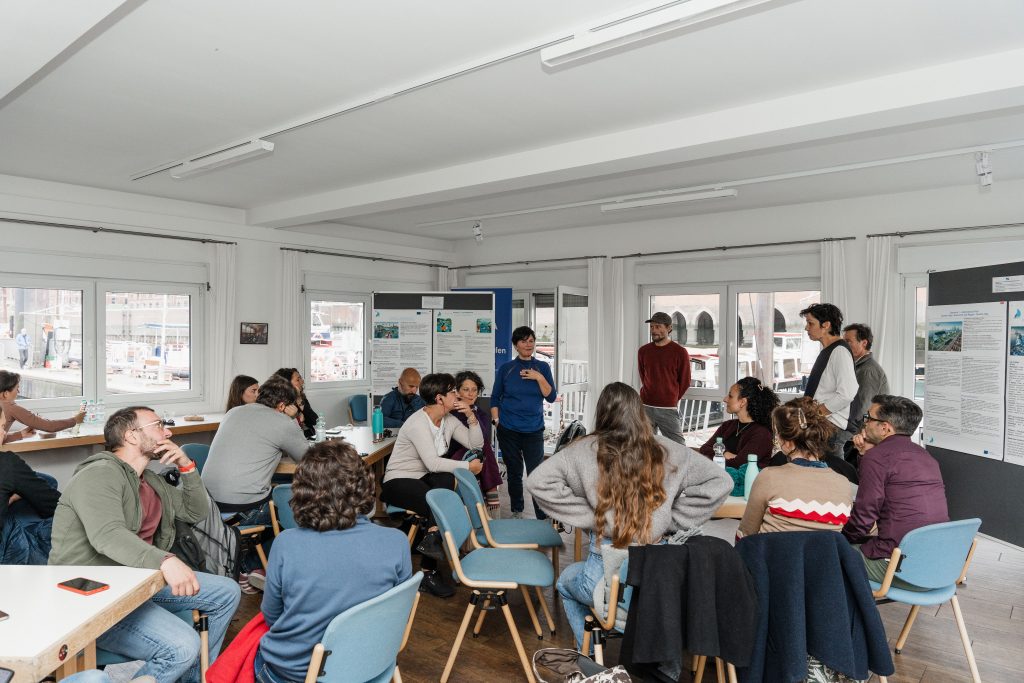
The Creative Workshop in Hamburg took place aboard the Flussschifferkirche, the Floating Church, a unique cultural space deeply connected to the history and social life of Hamburg’s port communities. The workshop began with a welcome by Mark Möller, who introduced the Floating Church as a longstanding initiative offering pastoral care and community outreach to people working on or around the water. Its mission also includes preserving the cultural and social heritage of port communities in a time of continuous urban and economic transformation, making it an ideal setting to reflect on the future of port work and vocational education.
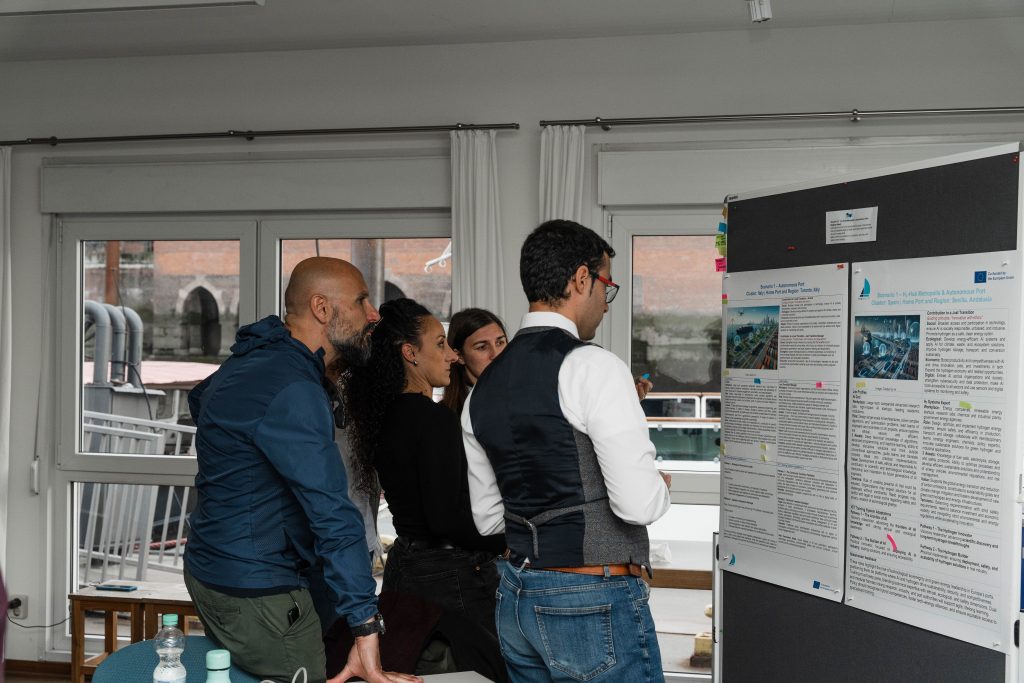
This workshop built on a process that had begun weeks earlier. During an online session early September, participants were introduced to the concept of “Utopian Future Scenarios 2045” and the method they would use during the study visit. In group sessions, partners began developing fictional job profiles and proposing adaptations to vocational education and training systems that could exist in these imagined futures. Between this online meeting and the Hamburg visit, national groups continued refining their ideas. They reviewed the job profiles and VET adaptations with local stakeholders and produced posters for the three utopian scenarios they were assigned.
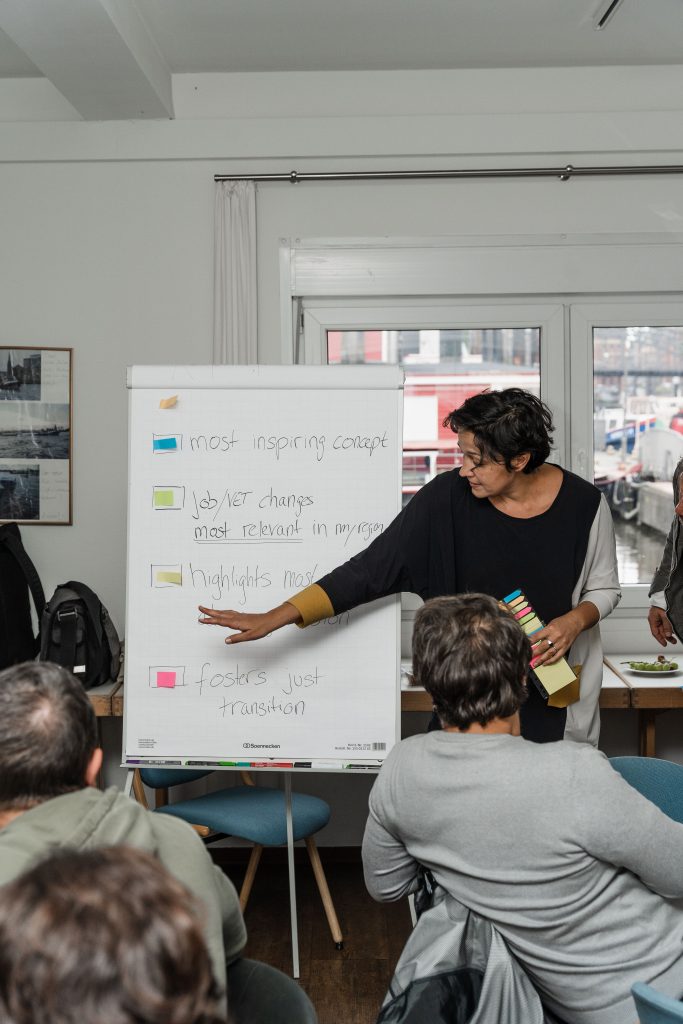
When participants met again in Hamburg for the final part of the Creative Workshop “Shaping the Future: Peer Review of Future Professions & VET Visions” the focus shifted toward presenting, reviewing, and exchanging feedback on the posters and concepts developed so far. Using methods such as a gallery walk and rounds of peer dialogue, participants explored the fictional job profiles and VET ideas produced by colleagues from different port regions. This setup encouraged comparison, discussion, and collaborative validation, helping partners identify shared challenges and inspiring insights that could guide future action.
After individually reviewing the posters and identifying priorities or concerns, participants returned to national groups to reflect on which outcomes were most relevant to their local contexts. These discussions helped clarify how the ideas generated through the utopian exercise might inform real-world development in their own port regions. The workshop concluded with a final feedback round, allowing participants to share their impressions of both the creative process and the wider experience of the study visit in Hamburg.
The Creative Workshop offered a space to think beyond immediate constraints and consider what port work, cities, and training systems could look like in 20 years. By building on shared exploration and cross-regional dialogue, the session helped crystallise visions that can support long-term planning, encourage imaginative thinking, and strengthen collaboration across European port regions.
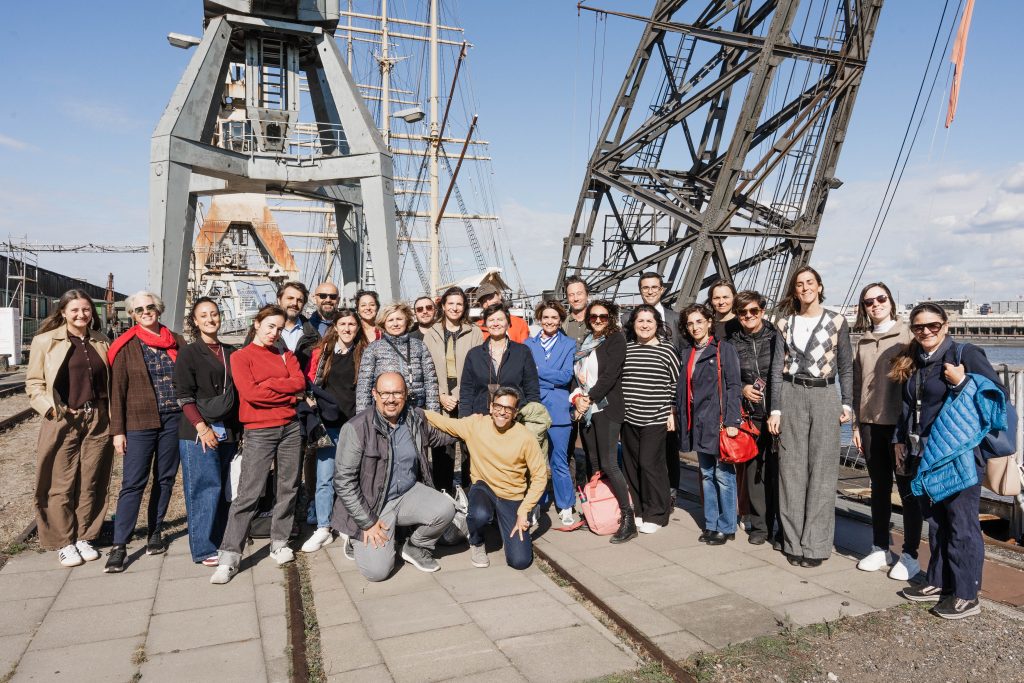
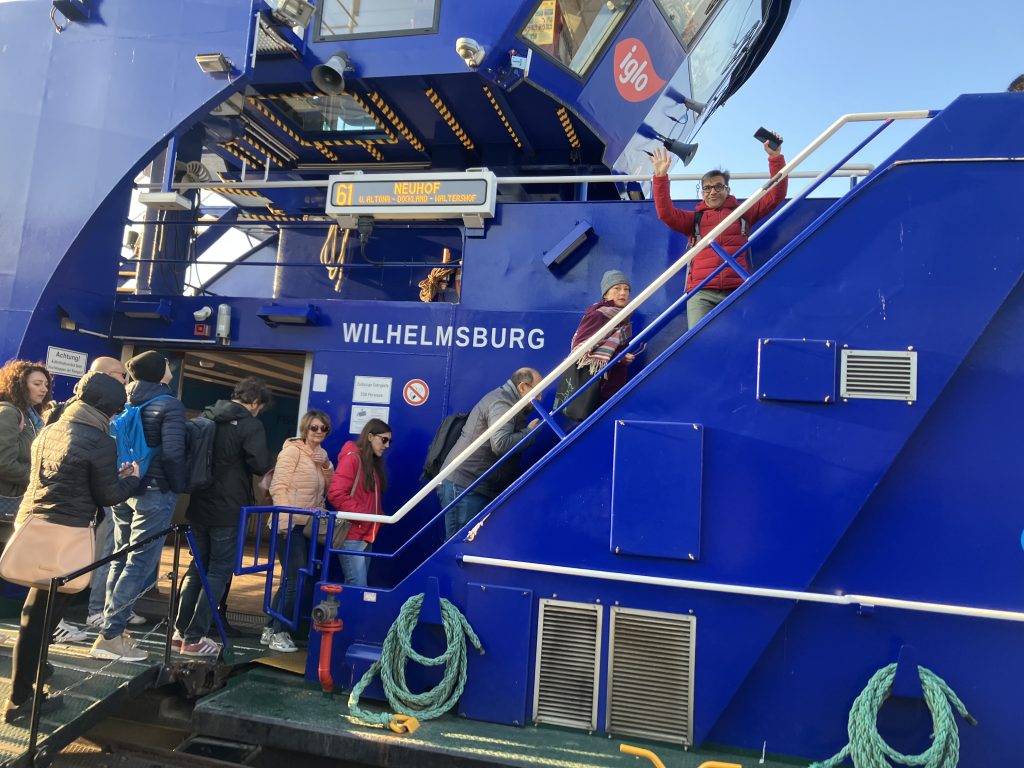
The 1st PortAbility Study Visit in Hamburg brought together partners from Spain and Italy to explore how the city has transformed its port areas, its economy, and its vocational education system over the past two decades. The visit focused on Hamburg’s long-term development strategies, the evolving structure of port-related work, and the changing demands placed on VET providers.
Over two intensive, very productive days, it offered an opportunity to exchange knowledge, reflect on shared challenges, and engage in dialogue with local stakeholders.
Day 1
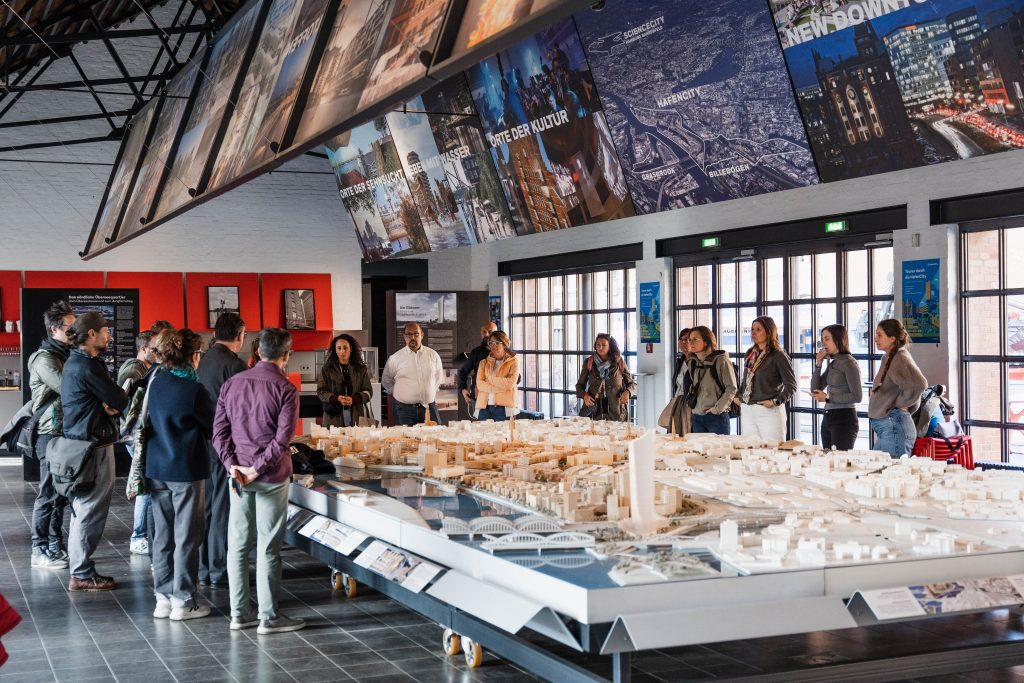
The first day began at the Berufliche Hochschule Hamburg (BHH) with an introduction to Hamburg’s port transformation. The session presented the Hamburg Port Development Plan 2040, a comprehensive strategy addressing land use, economic diversification, new business models, workforce development, and ecological goals. A Map & Glossary helped guide participants through key terms and the historical phases of port and city development, including the arrival of railway cargo, the emergence of HafenCity in the late 1990s and early 2000s, and major infrastructural and political factors such as the dredging of the Elbe and the impact of new maritime routes. This session provided the framework for dialogue among stakeholders from different port regions on economic change, skills planning, and the interplay between port development and urban transformation.
German vocational education and training
The second session offered an in-depth look at the German vocational education and training system, with particular reference to the challenges of vocational training in port logistics and the integration of vocational and academic pathways. The Hamburg Vocational University (BHH) represents an innovative model combining company-based training with academic study, allowing students to obtain both vocational qualifications and bachelor’s degrees. The session highlighted the central role of the Chambers of Commerce, the structure of occupational standards, and the long training path required for VET teachers. The German dual system, in which students are employed in companies during training, was explained, along with the framework of regulations that guide work-based learning. The model aims to ensure permeability within the system, and while enrolments have fluctuated due to economic and technological trends, the system’s flexibility remains a core strength.
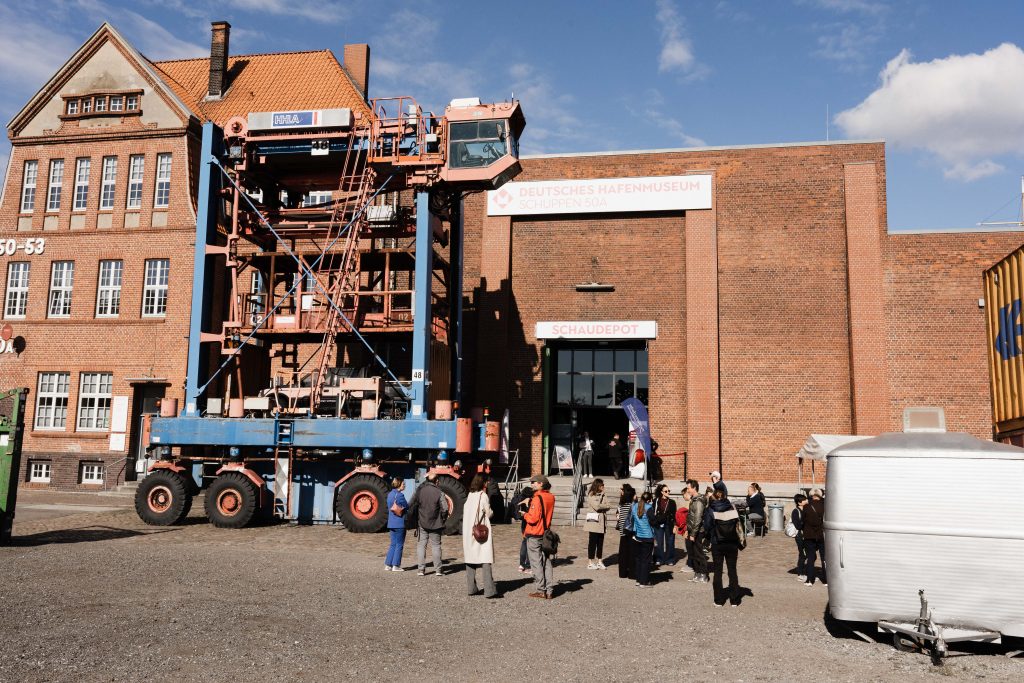
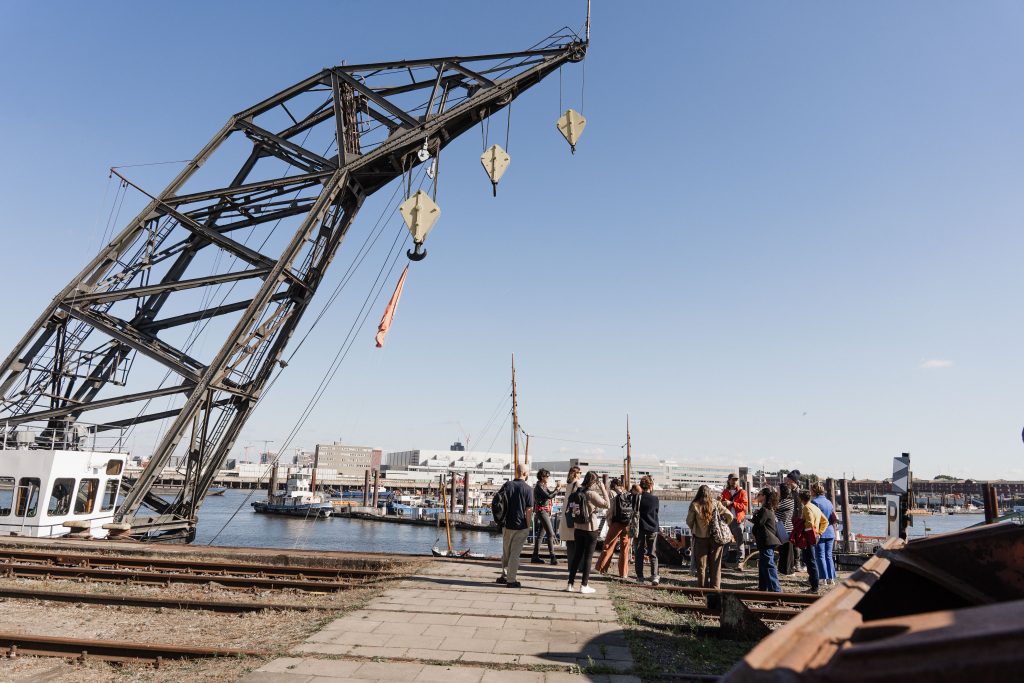
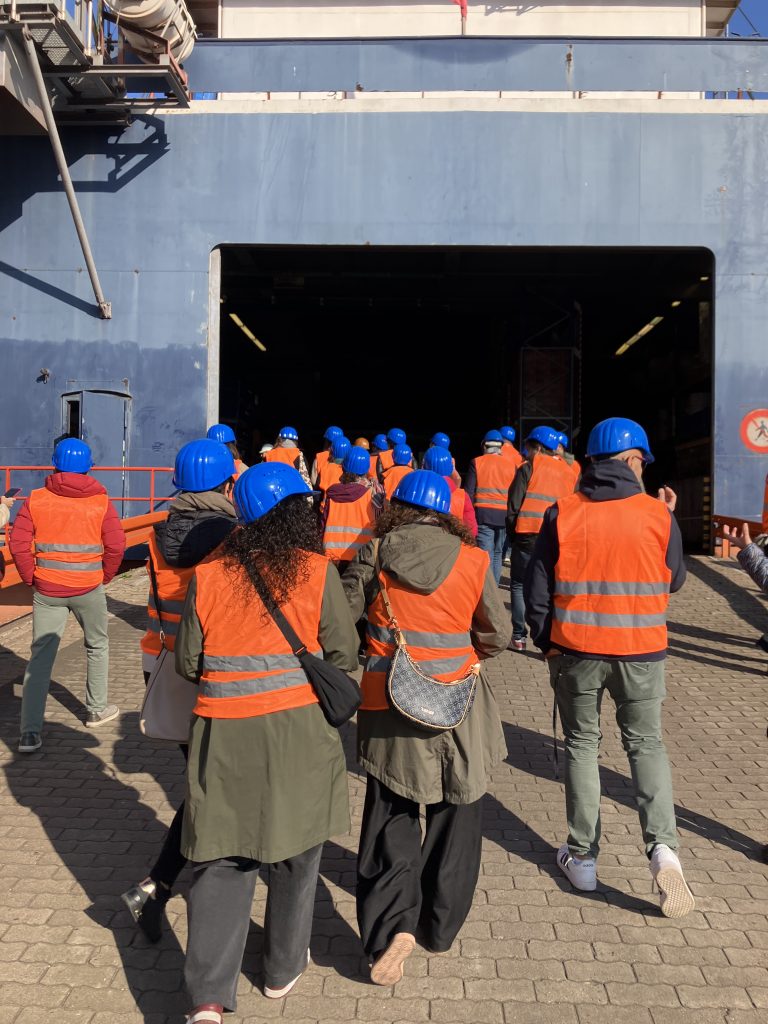
After lunch at the German Port Museum and a walk to explore the old port structure, history and evolution, the group visited the HHLA Container Terminal Altenwerder, one of the most advanced automated container terminals in Europe. The bus tour through the terminal demonstrated how automated logistics operate in practice and provided insight into the roles, ongoing changes, and skill needs emerging from highly digitalised port environments.
Later in the afternoon, partners were welcomed at Ma-Co Maritime Competence Centre. The visit introduced Ma-Co’s mission as Germany’s central training organisation for seaport operations and maritime logistics. Established as a modernised extension of earlier harbour schools, Ma-Co now provides training for both employees and jobseekers, operating across Germany and occasionally abroad. The Digital Training Centre represents a pilot initiative that offers practical, demand-driven training designed in close cooperation with companies. Training focuses on real operational needs, with trainers drawn from practice and programmes delivered only when companies require staff. This system ensures participants are trained for available jobs and provides companies with workers prepared for specific tasks. The presentation also included an overview of GHB, a joint organisation of port companies and trade unions that provides port workers to companies during peak periods, ensuring stable contracts for employees and flexibility for employers.
How new technologies reshape jobs, skills and competences
The next session introduced PortSkill 4.0, a project examining how technological developments, such as automation, VR/AR, drones, underwater maintenance systems, and automated vehicles, are reshaping job profiles and required competences. The analysis has identified key future skills, including resilience, concentration, and readiness to change. Ma-Co is developing new training formats using digital tools to address these emerging needs and support smooth job transitions within the port.
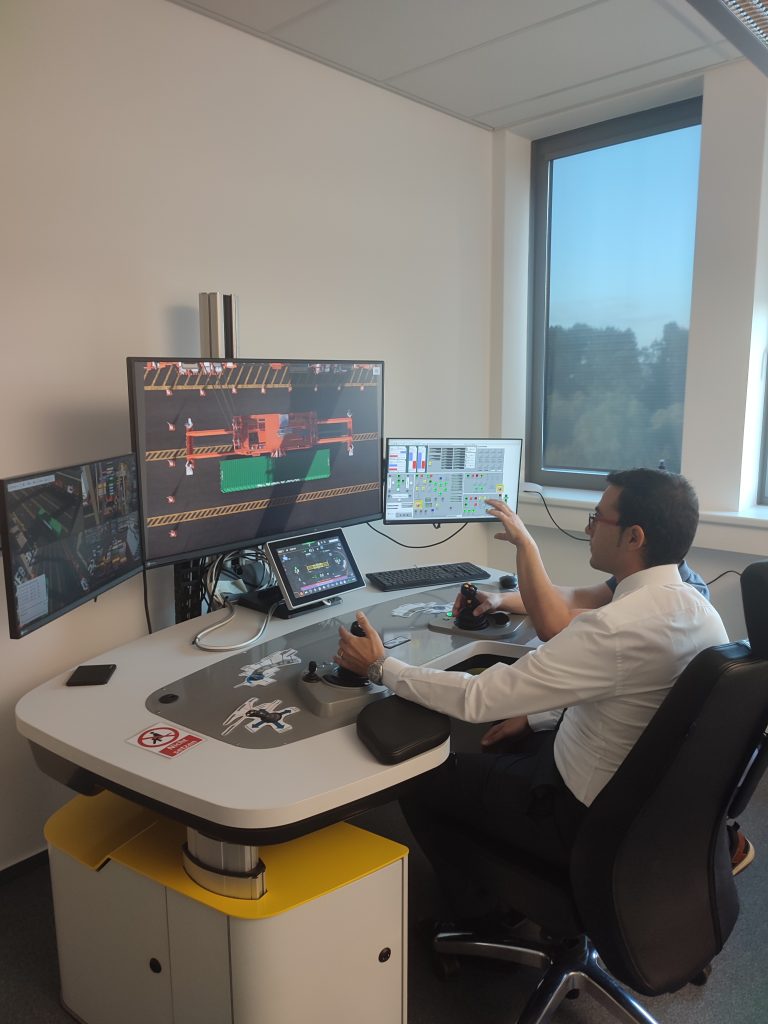
This was followed by a demonstration of Training 4.0 approaches at the Digital Training Centre. Participants explored low-threshold access to new technologies, VR-based simulations, and gamification methods that help learners build confidence. The session emphasised the cultural shift required in training institutions, where trainers are increasingly becoming moderators guiding learners through dynamic, technology-enhanced environments. The demonstration also included a simulator used for training future operators of automated cranes.
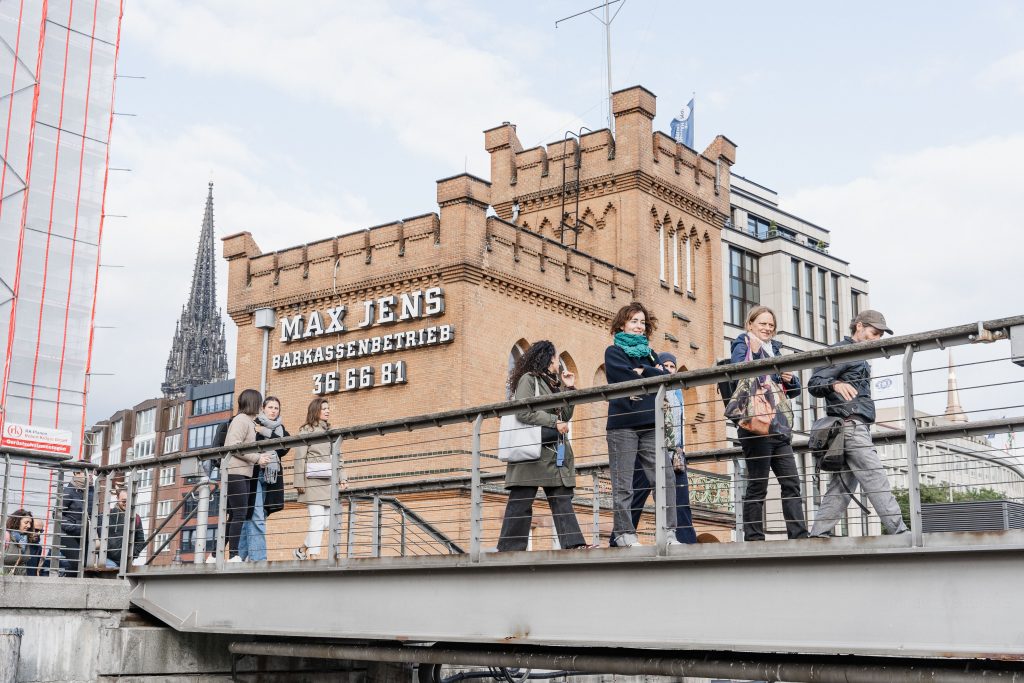
That evening, participants joined a guided walk through harbour-related nightlife and cultural spaces, exploring how port heritage, creative industries, and urban regeneration intersect in contemporary Hamburg. The walk highlighted how these activities contribute to economic diversification and open up new forms of employment, culture, and community life.
Day 2
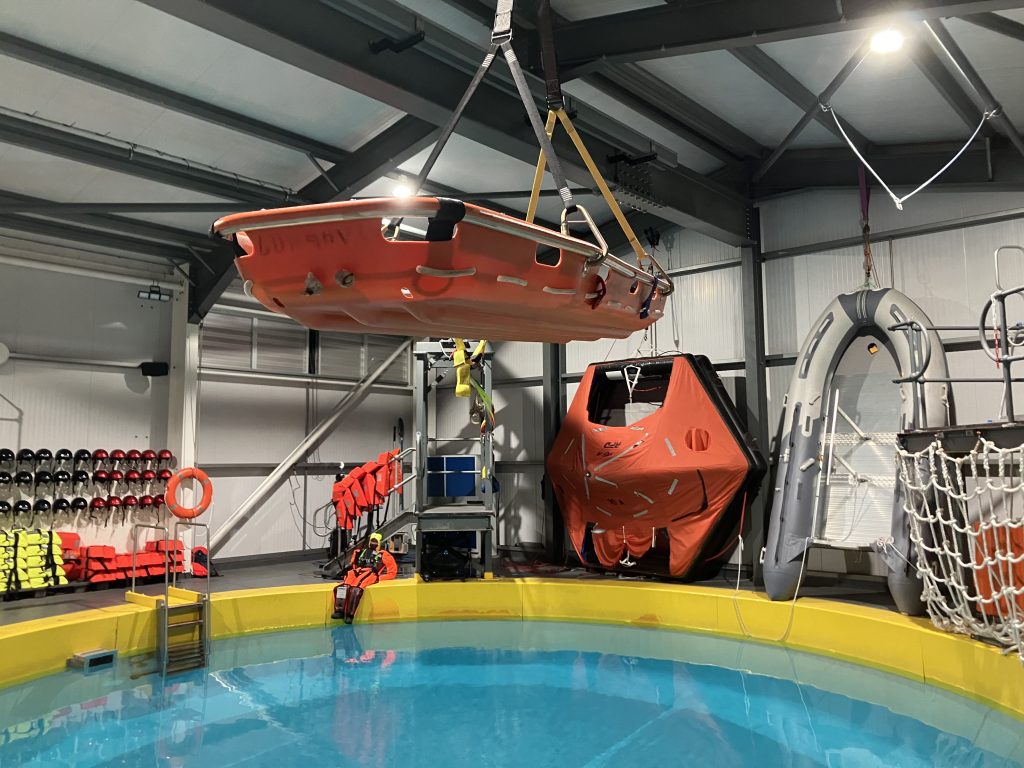
The second day began with a site visit to Ma-Co’s main maritime competence centre. The session covered Ma-Co’s extensive training offer, including port handling and logistics, loading and securing of goods, maritime rescue and offshore training, and firefighting. Training is adapted to different target groups, and certifications are issued for skills required by companies. Examples include the “Skilled Port Worker” qualification, which recognises prior experience and is currently being updated toward a 4.0 version, and tailored training programs for jobseekers. Ma-Co collaborates closely with job centres and employment agencies to identify training needs, and the organisation itself must meet strict certification standards.
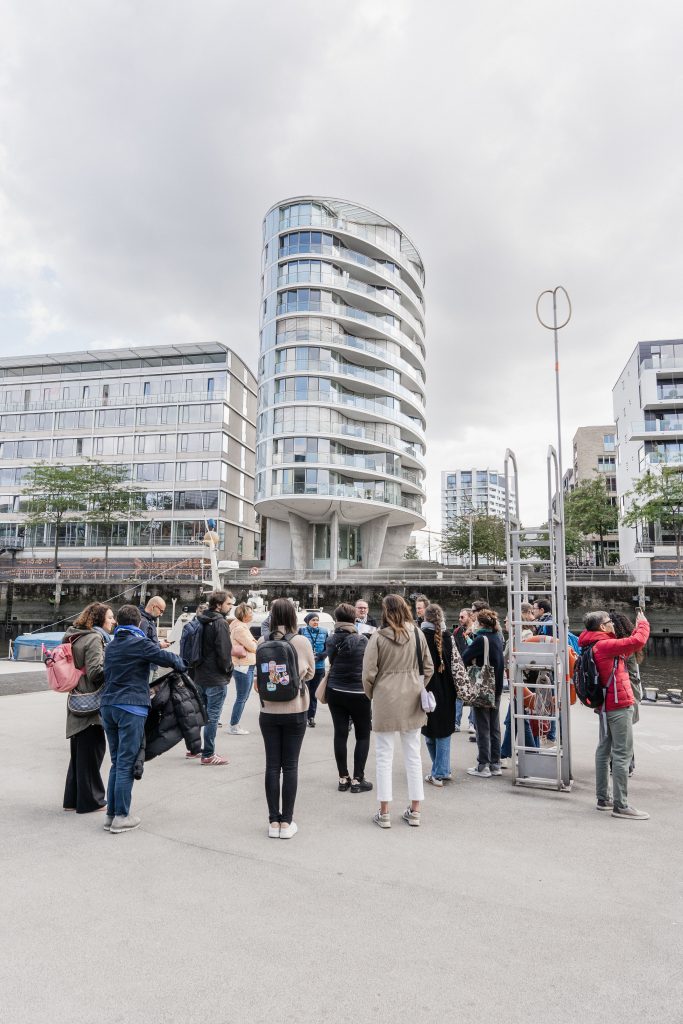
In the afternoon, the group visited HafenCity Hamburg and explored how large areas of former port and industrial land have been transformed into new urban districts. A presentation traced HafenCity’s development from its first master plan to current and future projects, followed by a walk through the district to observe how concepts of ecology, social inclusion, tourism, public space, and heritage shape this major urban redevelopment. The visit highlighted the impact on job profiles and career opportunities as port functions shift and new uses emerge.
The study visit concluded with the transfer to the Flussschifferkirche for the Creative Workshop.
Hamburg is both a case study and a valuable source of inspiration for PortAbility.
Being one of Europe’s leading port cities, it has advanced in the just transition, combining port transformation with urban regeneration, innovative training approaches, and strong cooperation between business, education, and public authorities.
Our German partners GSUB, Hidden Strategies, and the Hamburg Port Authority play a vital role in transferring lessons learned from Hamburg’s journey into the Mediterranean context.
PortAbility teams from Italy and Spain will be in Hamburg for two days for the first study visit of the project, which includes a very interesting Creative Workshop: during two sessions (one online and one in-person), participants will co-create fictional job profiles, explore how professions may evolve in port cities, and reflect on how VET systems must adapt to support these transformations.
Collaboration activities like this one are an essential part of the PortAbility project, since they create opportunities for knowledge transfer, strengthen partnership, and ensure that local solutions are informed by international best practices. Above all, they contribute to building the transnational network of CoVEs that will connect national CoVEs and equip port cities with the skills and pathways needed for a greener, more digital, and more inclusive future.
PortAbility has officially launched its presence on Facebook, LinkedIn, and Instagram. Through these channels, the project will share updates, news, and stories from across our partner network in Europe’s port cities.
Follow us to stay informed about our activities, events, and results, and to learn more about how PortAbility is working to make Vocational Education and Training (VET) a driver of a just green and digital transition in port economies.
Our goal is to create a vibrant online community where partners, stakeholders, and citizens can connect, exchange perspectives, and celebrate the impact of VET on the future of Europe’s ports.
The European Commission has started preparations for an EU Ports Strategy and EU Industrial Maritime Strategy and is inviting stakeholders to participate in the process.
In July, the Commissioner for Sustainable Transport and Tourism, Apostolos Tzitzikostas hosted two high-level Strategic Dialogues in Brussels. The meetings brought together representatives from port, shipbuilding, shipping, inland waterway and related industries to help jointly define priorities, opportunities and actions to feed into the development of the EU Ports and Industrial Maritime Strategies.
As gateways for trade, logistics, energy and military mobility, ports must be fit to support Europe’s future economic and strategic needs. A comprehensive EU Ports Strategy will aim to support the long-term competitiveness of ports in terms with a focus on security, energy transition, and sustainability.
At the same time, Europe’s shipbuilding, maritime manufacturing and shipping sectors are under growing pressure from global competition and rising security risks. The EU Industrial Maritime Strategy will aim to reinforce the sector’s competitiveness and resilience, while driving forward its green and digital transition.
The launch of these EU strategies comes at an excellent moment for PortAbility. By focusing on upskilling and reskilling in port cities, our project supports perfectly the EU’s ambition to strengthen ports and maritime industries, while ensuring that the green and digital transitions are fair, inclusive, and socially sustainable.
On 13–14 May 2025, the kick-off meeting of the PortAbility project took place in Taranto, Italy.
Co-funded by the Erasmus+ programme and led by CIOFS FP ETS, PortAbility brings together a European partnership of 27 organisations across Europe. The project focuses on creating a network of Centres of Vocational Excellence (CoVE) in four key Mediterranean port areas in Taranto (Italy), Andalusia (Spain), Volos (Greece), and Cyprus, with the support of German partners from Hamburg, a port that has already advanced in its transition.
The goal of PortAbility is clear: to make Vocational Education and Training (VET) a driver of a just transition in port territories – paving the way for a greener, more digital, and more inclusive economy.
The two-day meeting in Taranto marked the beginning of a collaborative journey that will sail for four years. Partners engaged in dialogue, exchanged perspectives, and set a shared vision. Together, we aim to empower port cities and their communities through upskilling and reskilling initiatives that will strengthen their role in Europe’s green and digital transitions, leaving no one behind.
To provide the best experiences, we use technologies like cookies to store and/or access device information. Consenting to these technologies will allow us to process data such as browsing behavior or unique IDs on this site. Not consenting or withdrawing consent, may adversely affect certain features and functions.
Functional
Always active
The technical storage or access is strictly necessary for the legitimate purpose of enabling the use of a specific service explicitly requested by the subscriber or user, or for the sole purpose of carrying out the transmission of a communication over an electronic communications network.
Preferences
The technical storage or access is necessary for the legitimate purpose of storing preferences that are not requested by the subscriber or user.
Statistics
The technical storage or access that is used exclusively for statistical purposes.The technical storage or access that is used exclusively for anonymous statistical purposes. Without a subpoena, voluntary compliance on the part of your Internet Service Provider, or additional records from a third party, information stored or retrieved for this purpose alone cannot usually be used to identify you.
Marketing
The technical storage or access is required to create user profiles to send advertising, or to track the user on a website or across several websites for similar marketing purposes.
Join our network and be the first to access the tools and information and of course all the news at your email!
Accessibility
Accessibility modes
Epilepsy Safe Mode
Dampens color and removes blinks
This mode enables people with epilepsy to use the website safely by eliminating the risk of seizures that result from flashing or blinking animations and risky color combinations.
Visually Impaired Mode
Improves website's visuals
This mode adjusts the website for the convenience of users with visual impairments such as Degrading Eyesight, Tunnel Vision, Cataract, Glaucoma, and others.
Cognitive Disability Mode
Helps to focus on specific content
This mode provides different assistive options to help users with cognitive impairments such as Dyslexia, Autism, CVA, and others, to focus on the essential elements of the website more easily.
ADHD Friendly Mode
Reduces distractions and improve focus
This mode helps users with ADHD and Neurodevelopmental disorders to read, browse, and focus on the main website elements more easily while significantly reducing distractions.
Blindness Mode
Allows using the site with your screen-reader
This mode configures the website to be compatible with screen-readers such as JAWS, NVDA, VoiceOver, and TalkBack. A screen-reader is software for blind users that is installed on a computer and smartphone, and websites must be compatible with it.
Online Dictionary
Readable Experience
Content Scaling
Default
Text Magnifier
Readable Font
Dyslexia Friendly
Highlight Titles
Highlight Links
Font Sizing
Default
Line Height
Default
Letter Spacing
Default
Left Aligned
Center Aligned
Right Aligned
Visually Pleasing Experience
Dark Contrast
Light Contrast
Monochrome
High Contrast
High Saturation
Low Saturation
Adjust Text Colors
Adjust Title Colors
Adjust Background Colors
Easy Orientation
Mute Sounds
Hide Images
Hide Emoji
Reading Guide
Stop Animations
Reading Mask
Highlight Hover
Highlight Focus
Big Dark Cursor
Big Light Cursor
Cognitive Reading
Virtual Keyboard
Navigation Keys
Voice Navigation
Accessibility Statement
portability-project.eu
21/10/2026
Compliance status
We firmly believe that the internet should be available and accessible to anyone, and are committed to providing a website that is accessible to the widest possible audience,
regardless of circumstance and ability.
To fulfill this, we aim to adhere as strictly as possible to the World Wide Web Consortium’s (W3C) Web Content Accessibility Guidelines 2.1 (WCAG 2.1) at the AA level.
These guidelines explain how to make web content accessible to people with a wide array of disabilities. Complying with those guidelines helps us ensure that the website is accessible
to all people: blind people, people with motor impairments, visual impairment, cognitive disabilities, and more.
This website utilizes various technologies that are meant to make it as accessible as possible at all times. We utilize an accessibility interface that allows persons with specific
disabilities to adjust the website’s UI (user interface) and design it to their personal needs.
Additionally, the website utilizes an AI-based application that runs in the background and optimizes its accessibility level constantly. This application remediates the website’s HTML,
adapts Its functionality and behavior for screen-readers used by the blind users, and for keyboard functions used by individuals with motor impairments.
If you’ve found a malfunction or have ideas for improvement, we’ll be happy to hear from you. You can reach out to the website’s operators by using the following email
Screen-reader and keyboard navigation
Our website implements the ARIA attributes (Accessible Rich Internet Applications) technique, alongside various different behavioral changes, to ensure blind users visiting with
screen-readers are able to read, comprehend, and enjoy the website’s functions. As soon as a user with a screen-reader enters your site, they immediately receive
a prompt to enter the Screen-Reader Profile so they can browse and operate your site effectively. Here’s how our website covers some of the most important screen-reader requirements,
alongside console screenshots of code examples:
Screen-reader optimization: we run a background process that learns the website’s components from top to bottom, to ensure ongoing compliance even when updating the website.
In this process, we provide screen-readers with meaningful data using the ARIA set of attributes. For example, we provide accurate form labels;
descriptions for actionable icons (social media icons, search icons, cart icons, etc.); validation guidance for form inputs; element roles such as buttons, menus, modal dialogues (popups),
and others. Additionally, the background process scans all the website’s images and provides an accurate and meaningful image-object-recognition-based description as an ALT (alternate text) tag
for images that are not described. It will also extract texts that are embedded within the image, using an OCR (optical character recognition) technology.
To turn on screen-reader adjustments at any time, users need only to press the Alt+1 keyboard combination. Screen-reader users also get automatic announcements to turn the Screen-reader mode on
as soon as they enter the website.
These adjustments are compatible with all popular screen readers, including JAWS and NVDA.
Keyboard navigation optimization: The background process also adjusts the website’s HTML, and adds various behaviors using JavaScript code to make the website operable by the keyboard. This includes the ability to navigate the website using the Tab and Shift+Tab keys, operate dropdowns with the arrow keys, close them with Esc, trigger buttons and links using the Enter key, navigate between radio and checkbox elements using the arrow keys, and fill them in with the Spacebar or Enter key.Additionally, keyboard users will find quick-navigation and content-skip menus, available at any time by clicking Alt+1, or as the first elements of the site while navigating with the keyboard. The background process also handles triggered popups by moving the keyboard focus towards them as soon as they appear, and not allow the focus drift outside it.
Users can also use shortcuts such as “M” (menus), “H” (headings), “F” (forms), “B” (buttons), and “G” (graphics) to jump to specific elements.
Disability profiles supported in our website
Epilepsy Safe Mode: this profile enables people with epilepsy to use the website safely by eliminating the risk of seizures that result from flashing or blinking animations and risky color combinations.
Visually Impaired Mode: this mode adjusts the website for the convenience of users with visual impairments such as Degrading Eyesight, Tunnel Vision, Cataract, Glaucoma, and others.
Cognitive Disability Mode: this mode provides different assistive options to help users with cognitive impairments such as Dyslexia, Autism, CVA, and others, to focus on the essential elements of the website more easily.
ADHD Friendly Mode: this mode helps users with ADHD and Neurodevelopmental disorders to read, browse, and focus on the main website elements more easily while significantly reducing distractions.
Blindness Mode: this mode configures the website to be compatible with screen-readers such as JAWS, NVDA, VoiceOver, and TalkBack. A screen-reader is software for blind users that is installed on a computer and smartphone, and websites must be compatible with it.
Keyboard Navigation Profile (Motor-Impaired): this profile enables motor-impaired persons to operate the website using the keyboard Tab, Shift+Tab, and the Enter keys. Users can also use shortcuts such as “M” (menus), “H” (headings), “F” (forms), “B” (buttons), and “G” (graphics) to jump to specific elements.
Additional UI, design, and readability adjustments
Font adjustments – users, can increase and decrease its size, change its family (type), adjust the spacing, alignment, line height, and more.
Color adjustments – users can select various color contrast profiles such as light, dark, inverted, and monochrome. Additionally, users can swap color schemes of titles, texts, and backgrounds, with over seven different coloring options.
Animations – person with epilepsy can stop all running animations with the click of a button. Animations controlled by the interface include videos, GIFs, and CSS flashing transitions.
Content highlighting – users can choose to emphasize important elements such as links and titles. They can also choose to highlight focused or hovered elements only.
Audio muting – users with hearing devices may experience headaches or other issues due to automatic audio playing. This option lets users mute the entire website instantly.
Cognitive disorders – we utilize a search engine that is linked to Wikipedia and Wiktionary, allowing people with cognitive disorders to decipher meanings of phrases, initials, slang, and others.
Additional functions – we provide users the option to change cursor color and size, use a printing mode, enable a virtual keyboard, and many other functions.
Browser and assistive technology compatibility
We aim to support the widest array of browsers and assistive technologies as possible, so our users can choose the best fitting tools for them, with as few limitations as possible. Therefore, we have worked very hard to be able to support all major systems that comprise over 95% of the user market share including Google Chrome, Mozilla Firefox, Apple Safari, Opera and Microsoft Edge, JAWS and NVDA (screen readers).
Notes, comments, and feedback
Despite our very best efforts to allow anybody to adjust the website to their needs. There may still be pages or sections that are not fully accessible, are in the process of becoming accessible, or are lacking an adequate technological solution to make them accessible. Still, we are continually improving our accessibility, adding, updating and improving its options and features, and developing and adopting new technologies. All this is meant to reach the optimal level of accessibility, following technological advancements. For any assistance, please reach out to
Portability Project
Strategies for Vocational Education & Training to support Port City Economies towards a Just Transition
Funded by the European Union. Views and opinions expressed are however those of the author(s) only and do not necessarily reflect those of the European Union or the European Education and Culture Executive Agency (EACEA). Neither the European Union nor EACEA can be held responsible for them.
Follow us
Subscribe to our newsletter
Portability Project
Strategies for Vocational Education & Training to support Port City Economies towards a Just Transition
Funded by the European Union. Views and opinions expressed are however those of the author(s) only and do not necessarily reflect those of the European Union or the European Education and Culture Executive Agency (EACEA). Neither the European Union nor EACEA can be held responsible for them.